


YOUR ITINERARY:
PragueDay 1
- On your arrival at Prague airport, meeting with your individual guide and transfer to your hotel.
- Transfert to start of excursion. A half day introductory tour around the city.
- "The Residence of Czech Kings — Prague Castle"
 A
huge, ancient fortress stonily ribbons the hill rising above Prague’s
Mala Strana. Its massive walls and towers, and the soaring spires of
Saint Vitus Cathedral, are visible from almost every quarter of the
city. Here legend and archeological evidence converge: this has been
the seat of Bohemian royalty since the 9th century. We are at Prague
Castle, or simply “Hrad”, as it is known in Czech, residence
of Czech Kings, Emperors, Habsburg monarchs and now, the President of
the Czech Republic. We pass through its great gates, watched over in
equal measure by two fierce stone Titans and somber presidential guards,
and make our way through the Castle courtyards. Up ahead we catch sight
of the glorious Saint Vitus Cathedral, and take in the grandeur of this
exhilarating Gothic structure. Its towers and spires, stained glass
and monstrous chimeras, were constructed over many centuries by a plethora
of Europe’s most renowned artists, stonemasons and architects.
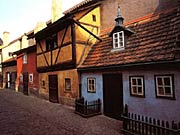
Beyond the cathedral lies Golden Lane, the little medieval community
originally built in the sixteenth century by perhaps the most melancholic
and madly acquisitive of all the Habsburg emperors, Rudolf II. Legends
surround this charming, miniscule collection of cottages wherein lived
court-maintained alchemists and sorcerers – and not a few infamous
charlatans - in pursuit of the philosopher’s stone. Moreover,
for a short time in the early years of the twentieth century, Golden
Lane was home to the world-famous author of Metamorphosis and The Trial,
Franz Kafka. We end our tour with a meandering stroll through the grounds
and beautifully landscaped gardens of Prague Castle…
A
huge, ancient fortress stonily ribbons the hill rising above Prague’s
Mala Strana. Its massive walls and towers, and the soaring spires of
Saint Vitus Cathedral, are visible from almost every quarter of the
city. Here legend and archeological evidence converge: this has been
the seat of Bohemian royalty since the 9th century. We are at Prague
Castle, or simply “Hrad”, as it is known in Czech, residence
of Czech Kings, Emperors, Habsburg monarchs and now, the President of
the Czech Republic. We pass through its great gates, watched over in
equal measure by two fierce stone Titans and somber presidential guards,
and make our way through the Castle courtyards. Up ahead we catch sight
of the glorious Saint Vitus Cathedral, and take in the grandeur of this
exhilarating Gothic structure. Its towers and spires, stained glass
and monstrous chimeras, were constructed over many centuries by a plethora
of Europe’s most renowned artists, stonemasons and architects.
Beyond the cathedral lies Golden Lane, the little medieval community
originally built in the sixteenth century by perhaps the most melancholic
and madly acquisitive of all the Habsburg emperors, Rudolf II. Legends
surround this charming, miniscule collection of cottages wherein lived
court-maintained alchemists and sorcerers – and not a few infamous
charlatans - in pursuit of the philosopher’s stone. Moreover,
for a short time in the early years of the twentieth century, Golden
Lane was home to the world-famous author of Metamorphosis and The Trial,
Franz Kafka. We end our tour with a meandering stroll through the grounds
and beautifully landscaped gardens of Prague Castle…
PragueDay 2
- Breakfast at your hotel. Transfert to start of excursion.
- Excursion "Jewish Quarter — Josefov"
 Prague’s
Josefov is home to many of Central Europe’s richest collections
of Jewish historical and cultural artifacts. This tiny quarter, bordered
by the Vltava River, contains plentiful exhibitions ranging from the
centuries-old history of the Jewish people in the Czech and Moravian
lands to modern Jewish art and history. The Moorish-style Spanish Synagogue
is one of the most beautiful in Europe with magnificent interiors. Upon
entering the Old-New Synagogue, we sense the spirit of a people who
have worshipped within its ancient walls since the mid-thirteenth century.
Its 700 year-old walls conjure echoes of a lively populace of craftsmen,
artists and scholars. There are also poignant memorials to the terrible
losses inflicted on the Jewish community throughout its long history
in the Czech Lands. The Old-New Synagogue remains a defiant witness
to a time of brutal pogroms, when the Jewish community was forcibly
walled within the Old Ghetto. The Pinkas Synagogue, adjacent to the
Old Jewish Cemetery, contains a stark stone memorial with the names
of the over 77,000 Czech and Slovak Jews killed by the Nazis during
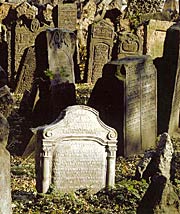
the Second World War. We walk through the Old Jewish Cemetery, watched
over by great rafts of rook nests high in the trees. Twelve thousand
Jewish citizens were buried here between the fifteenth to eighteenth
centuries. The time-chiseled Hebrew on the jumbled gravestones tells
us of the vibrant lives of some of the inhabitants.
Prague’s
Josefov is home to many of Central Europe’s richest collections
of Jewish historical and cultural artifacts. This tiny quarter, bordered
by the Vltava River, contains plentiful exhibitions ranging from the
centuries-old history of the Jewish people in the Czech and Moravian
lands to modern Jewish art and history. The Moorish-style Spanish Synagogue
is one of the most beautiful in Europe with magnificent interiors. Upon
entering the Old-New Synagogue, we sense the spirit of a people who
have worshipped within its ancient walls since the mid-thirteenth century.
Its 700 year-old walls conjure echoes of a lively populace of craftsmen,
artists and scholars. There are also poignant memorials to the terrible
losses inflicted on the Jewish community throughout its long history
in the Czech Lands. The Old-New Synagogue remains a defiant witness
to a time of brutal pogroms, when the Jewish community was forcibly
walled within the Old Ghetto. The Pinkas Synagogue, adjacent to the
Old Jewish Cemetery, contains a stark stone memorial with the names
of the over 77,000 Czech and Slovak Jews killed by the Nazis during
the Second World War. We walk through the Old Jewish Cemetery, watched
over by great rafts of rook nests high in the trees. Twelve thousand
Jewish citizens were buried here between the fifteenth to eighteenth
centuries. The time-chiseled Hebrew on the jumbled gravestones tells
us of the vibrant lives of some of the inhabitants.
Prague – TerezinDay 3
- Breakfast at your hotel.
- Excursion to the Terezin Fortress.
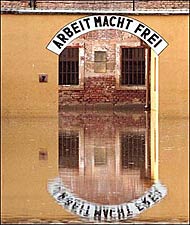 Fortress
Terezin was built in the 18th century to serve as the northern fortifications
of the Habsburg Empire. It lives on in Czech memory, not for the glorious
battles fought there, but as a terrible reminder of the Nazi Occupation.
Terezin served as a round-up site for Jewish citizens throughout the
country and the rest of Nazi-occupied Europe. Here the people lived
in the Ghetto until they were transported east to the Death Camps –
or perished. During the Nazi Occupation, 140,000 Jewish people were
deported to Terezin, tens of thousands died here from starvation, overcrowding
and brutal treatment; there were only 17,500 survivors at war’s
end. The Ghetto Museum, established in 1991, suffered some damage from
the fierce floods of 2002, but has since been repaired. It presents
an extensive exhibition of historical documents, oral histories, films
and photographs which enable the visitor to witness the terrible suffering
of those who lived and died there.
Fortress
Terezin was built in the 18th century to serve as the northern fortifications
of the Habsburg Empire. It lives on in Czech memory, not for the glorious
battles fought there, but as a terrible reminder of the Nazi Occupation.
Terezin served as a round-up site for Jewish citizens throughout the
country and the rest of Nazi-occupied Europe. Here the people lived
in the Ghetto until they were transported east to the Death Camps –
or perished. During the Nazi Occupation, 140,000 Jewish people were
deported to Terezin, tens of thousands died here from starvation, overcrowding
and brutal treatment; there were only 17,500 survivors at war’s
end. The Ghetto Museum, established in 1991, suffered some damage from
the fierce floods of 2002, but has since been repaired. It presents
an extensive exhibition of historical documents, oral histories, films
and photographs which enable the visitor to witness the terrible suffering
of those who lived and died there.- Water Show at Krizik Fountain *
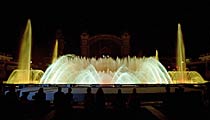 An
exciting, unusual water show awaits visitors to Prague’s Vystavište
(Exhibition Grounds). The Krizik Fountain is rumored to be the world’s
largest musical fountain, and there are regular daily shows. Classical
ballet and modern dance performances are set against the fountain’s
soaring rainbow-colored jets and spectacular lighting effects. The Krizik
Fountain was built as part of the 1891 Prague Exposition, and is named
after engineer, Frantisek Krizik, who created its special effects.
An
exciting, unusual water show awaits visitors to Prague’s Vystavište
(Exhibition Grounds). The Krizik Fountain is rumored to be the world’s
largest musical fountain, and there are regular daily shows. Classical
ballet and modern dance performances are set against the fountain’s
soaring rainbow-colored jets and spectacular lighting effects. The Krizik
Fountain was built as part of the 1891 Prague Exposition, and is named
after engineer, Frantisek Krizik, who created its special effects.
PragueDay 4
- Breakfast at the hotel.
- Free time to further explore at your own pace.
- Concert of classical music "An evening with Mozart" at villa Bertramka
-
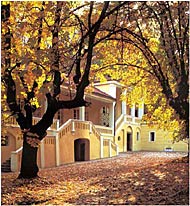 During
the 18th century, Villa Bertramka was the country home of the Dušek
family. Today it lies in the fast-growing Prague neighborhood of Smichov.
Its fame rests on the fact that the Dušeks were friends of the
great composer, Wolfgang Amadeus Mozart. The Dušeks put the Maestro
up during his 1787 and 1791 visits to Prague, and it was here, in
Villa Bertramka’s idyllic setting, that Mozart finished the
score to his opera, Don Giovanni. The Villa houses a museum dedicated
to Mozart, and presents concerts of his Chamber music.
During
the 18th century, Villa Bertramka was the country home of the Dušek
family. Today it lies in the fast-growing Prague neighborhood of Smichov.
Its fame rests on the fact that the Dušeks were friends of the
great composer, Wolfgang Amadeus Mozart. The Dušeks put the Maestro
up during his 1787 and 1791 visits to Prague, and it was here, in
Villa Bertramka’s idyllic setting, that Mozart finished the
score to his opera, Don Giovanni. The Villa houses a museum dedicated
to Mozart, and presents concerts of his Chamber music.Program: "An Evening with Mozart"
19:30 – welcome drink / glass of champagne
19:45 – visit to the Mozart museum
20:00 – concert of classical music
TrebicDay 5
- Breakfast at your hotel.
- Visit to the city Trebic.
-
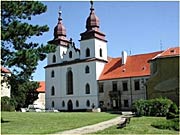 Our
destination is a unique monument to Jewish history, included on UNESCO’s
list of World Heritage sites. The Jewish Quarter of Trebic is an exceptional
testament to the cultural traditions of the Jewish Diaspora in central
Europe. Its walls and ancient houses bear witness to the longevity
and vibrancy of Jewish life here. The proximity of the Jewish Quarter,
the old Jewish Cemetery and the Basilica of Saint Procopius reminds
of the co-existence of Jewish and Christian cultures in Trebic from
the Middle Ages to the 20th century. The Basilica, built as part of
the Benedictine monastery in the early 13th century, is a remarkable
example of the influence of Western European architectural heritage
in this region.
Our
destination is a unique monument to Jewish history, included on UNESCO’s
list of World Heritage sites. The Jewish Quarter of Trebic is an exceptional
testament to the cultural traditions of the Jewish Diaspora in central
Europe. Its walls and ancient houses bear witness to the longevity
and vibrancy of Jewish life here. The proximity of the Jewish Quarter,
the old Jewish Cemetery and the Basilica of Saint Procopius reminds
of the co-existence of Jewish and Christian cultures in Trebic from
the Middle Ages to the 20th century. The Basilica, built as part of
the Benedictine monastery in the early 13th century, is a remarkable
example of the influence of Western European architectural heritage
in this region.
PragueDay 6
- Breakfast at your hotel.
- Transfer to the airport with your guide, departure.